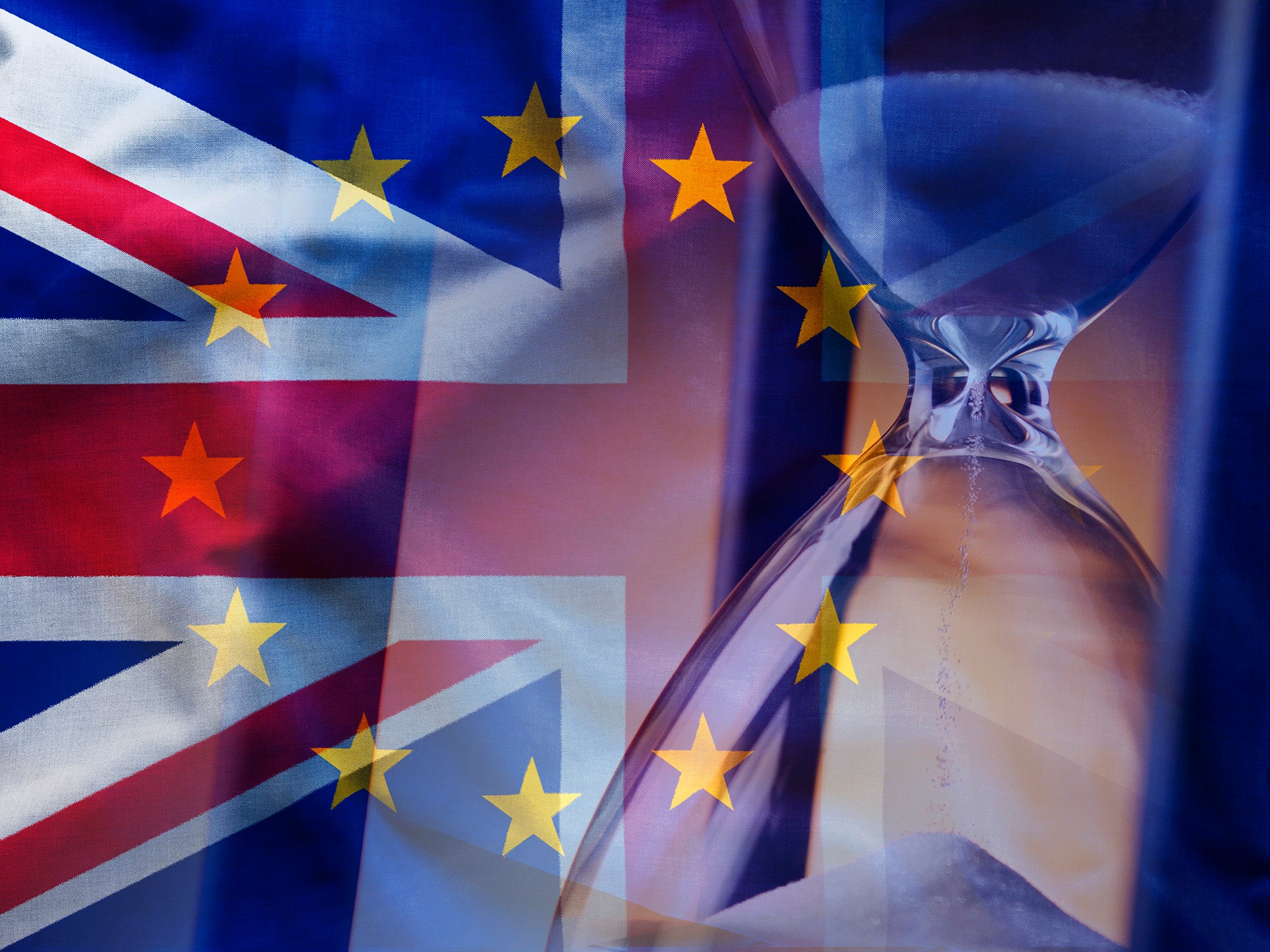
A historically flawed electoral system, an unrestricted rightwing politico-media complex and lying politicians were the fundamental causes of Brexit; and they still exist as the fundamental cancers attached to British democracy today. A radical update of the political system is urgently needed. In this article I’ll touch on what went wrong, how we can ensure all political persuasions are adequately represented in future, and how a more secure democratic connection can be made between people and politics.
Two-party states are dead men walking.
Britain. The home of parliament, said to be the most democratic form of government when it was conceived in 1215, and when developed over the following centuries to what we have today. First Past the Post (FPTP) was the system chosen, with each constituencies MP being selected to stand in parliament based on the most amount of votes being accumulated. Simple and effective right?
To some; yes. Yet what about the losers in a winner-takes-all race? Since its creation, parliament has been a heavily dichotomous institution. From Whigs and Tories to Labour and the Conservatives, governing and the governed have been the only two categories available to political parties. When coming to such an impasse as Brexit, which has historically divided the country, what did our officials decide to do? Put it to the people of course. Yet nothing was done to ensure all potential views of European Union membership were made clear to the electorate. Britain’s leaders gave two choices; yes or no. Black or White; reflecting the long-held tradition of Parliament. Yet as anything in life, we know the grey zone in-between two poles is where the majority lies. In a decision that affected everyone holistically, we were divided into tribal camps, and told to prepare for political warfare.
To give two options to a question that has a thousand answers, could we really expect the result to be respected? The idea of a united Europe to varying degrees politically, economically, socially and militarily has so many complex components that one question could simply not do any justice to the position we found ourselves in as Europeans in the 2000s prior to 2016. Europe had been moving in a collective direction since the fall of the Soviet Union, and it seemed that the prowess of the continent could have grown to rival that of the American hegemony or the Chinese state, unseen since prior to the Second World War. Yet Britons were unhappy, and had been distrusting of their mainland counterparts, in part for fear of creating something greater than Britain alone. This nationalistic vision of Britain and her Empire still twinkled in the eyes of many, many who felt that the present had not been kind to a sovereign land that led Europe for centuries in times past.
However, this information is not unknown, European integration has had many interpretations since the UK first joined the European Communities in 1973, and has been championed and despised by left, right and centre. So why, with prior knowledge of this, were we led to a stance of stay and remain or leave and lose it all? Indeed, stay or leave what? Do we wish to retain more political independence from European directives? Do we wish to revoke our customs union and market access for frictionless trade and travel? If yes, how MUCH of these institutions do we reject? 50%? 75%? The question itself only really creates more questions, and little in the way of answers. So how were we ever supposed to address the issue from all its angles with a one word reply?
Fundamentally, the British political system has always prioritised simplicity and limited interaction between parliament and people, over full democratic oversight and input by the demos. To bring my point full circle, it did not matter that Brexit was the issue, systems are designed to cope with problems and produce a solution. Yet Britain it seems was designed to take problems and create more problems. The idea that any issue can be solved by providing only two possible solutions is terribly unpragmatic among many other things. So to side with 52% over 48% in an issue where so many individual sects exist (indeed in an environment where rational perspectives were hard to come by, and disinformation was being served up on the side of buses with promises of everything) was bound to fuel the fire of division and leave more displeased with the outcome than pleased; on both sides of the table.
Yet the only thing that has united Britons from Brexit until now is the idea that change is LONG overdue. Be it in or out of Europe, the people of this land know that ‘business as usual’ is no longer an option. People are unhappy when unheard, and when only two majority voices are allowed airtime, that unhappiness turns to anger and hate. Business as usual will continue if the two same CEOs remain in the conference room. So when many new and differing views cannot be expressed by the old two, is the rational solution not to open the door to fresh faces? No longer can we accept that the existing speakers for the people ‘may’ advocate a view that ‘might’ co-inside with what we believe in. For such a diverse populous such as Britain’s, an equally diversified form of political representation is needed.
Until this idea reaches the decision-making arena of British politics, or until it is forced by a popular revolution, the dead will walk on. Yet this does not change the fact that they are still dead men on the way to the grave, and whilst they still step, we the people can decide the way in which we want our future to be decided.
Proportional Representation for the Nation

The most practical and non-sensical way to provide proper representation to a country where many feel marginalised is through proportional representation (PR). The simple idea of proportionality is that the number of votes cast as a percentage for a particular party reflect the percentage of seats won by that same party in parliament. In the current FPTP system for example, many hundreds of thousands of votes are rendered pointless as they are cast in the wrong constituency, where the opposing party has a strong vote share based on the majority demographic. Therefore election after election, generation after generation those that do not select the incumbent MP as their candidate, go unrepresented for yet another 5 year term. However, these people are still of equal value as voters, and for too long we have thought of them as sore losers; if the entire game is set up against you, how could you not be?
Indeed, once this view is reached, the next question arises; what form of PR do we decide to use? And will it actually enhance representation? Like Brexit, this question has a multitude of answers, but to keep it simple I will outline which system I would select, and what to amend to counter any major disadvantages. To make clear, some forms of PR include FPTP as a component of the overall system to ensure ‘strong mandates’ and a connection between constituent and MP. I do not buy into these. To include the old system in a ‘new’ system is completely self-defeating and piecemeal. Therefore, if you like, a ‘clean’ version of PR would be my preference.
To represent Britain, look to Europe

It seems a little odd to say since we have now formally exited from the European Union, but our best option is to steal back the mainland’s form of voting during European Parliament Elections. The ‘Party List’ PR system is best explained by the Electoral Reform Society;
“Rather than electing one person per area, in Party List systems each area is bigger and elects a group of MPs that closely reflect the way the area voted. At the moment we have 650 constituencies, each electing 1 Member of Parliament (MP); under a Party List system we might have 26 constituencies each electing 25 MPs.”
Indeed, the system is well-proven, being used in over 80 different countries in different capacities as well as the EU. Party Lists simplify the political choice for the average citizen; find a party you agree with and vote. That vote goes towards the total party vote for a particular region, and will be reflected accurately in the number of seats attributed. This increase in constituency sizes allows as many votes as possible to have real effects, tearing down the smaller constituency boundaries which has led to the concept of ‘safe seats’ in today’s party politics. Therefore, all seats in any region are always up for grabs if the current MPs do not fulfil their promises made at the last election cycle. This change is highly understated in mainstream commentary, as it fundamentally does not allow parties to become lazy in what they offer their constituents, even if they had been favoured at the previous election. It also means that parties will have to go the extra mile if they wish to gain more seats in a locale, thus creating more ‘undecided voters’ in the build up to elections. Many would see indecision as weakness, yet I see it as a strength; to the people. The idea that parties really do have to ‘win’ voters is in full effect in this instance, and reduces the tribalist divide into sides, which is what has left us so primitive politically in how we discuss, debate and decide our collective future.
When choosing which candidates to field, I believe that parties know their members best. Therefore it makes sense to use a closed or semi-open form of candidate selection, meaning voters still vote for parties, but it is those parties that decide whom should stand where. At this point some may begin to criticise the Party List system for not being able to form a real connection between MP and constituent. Yet a particular amendment for this issue would be to mandate candidate selection based on local connection (i.e not sending southerners to the north and vice versa) or specific knowledge of issues that are of upmost importance to an area (social mobility, housing, environmental protection, etc). Furthermore if one wishes to speak to a specific MP either by party or province, each area must have quick and easy forms of communication, from emails to videocalls so constituents can schedule meetings to discuss local queries.
In this, I also believe the increasing importance of Citizens Assemblies cannot be disregarded. Citizen participation in politics goes hand-in-hand with proportional voting. Like jury service, call ups can be random and bring together a group that make up the true diverse dynamic of modern Britain. From race, religion, sexual orientation to political views and economic situation. Every voice is of equal value, with dissenting speech even more so. To truly provide a mandate for government, ALL of the UK needs to be informed and asked. Whilst also helping to solve our problems, these institutional settings can also aid our learning about people that may even live 5 minutes away, that have radically different views, personalities and interests to our own. This exposure to difference, can in its own way help to increase general understanding of who we are as a nation.
This lends to my final point about coalitions. FPTP’s defining characteristic is ‘strong and stable’ governance. Yet if you look at recent history that has been far from the truth. In reality it provides the victorious party with enough room to enact policies at will, even if they are harmful to us as people. So to think that coalitions would in some way worsen this situation is delusional. Coalitions allow no one to fully stretch their wings. This can be both good and bad, depending on who you politically support and who is in power at any given moment. However this is a contradictory belief, if only your party is allowed to do everything they wish to, yet when the opposition are in play they are wrong for doing so. Therefore although coalition means compromise, it also means more of the country at large are in rooms where policy decisions are made, destroyed and re-imagined. Is this not truer democracy? To put more of the people in power? Where we are all allowed to talk, we will find that we hold more similarities than differences, and can find common ground for a common good.
Everything may never be perfect in this life, but if we allow everyone to say their piece, we can at least provide more people with their own peace.
 Politica Carnivora