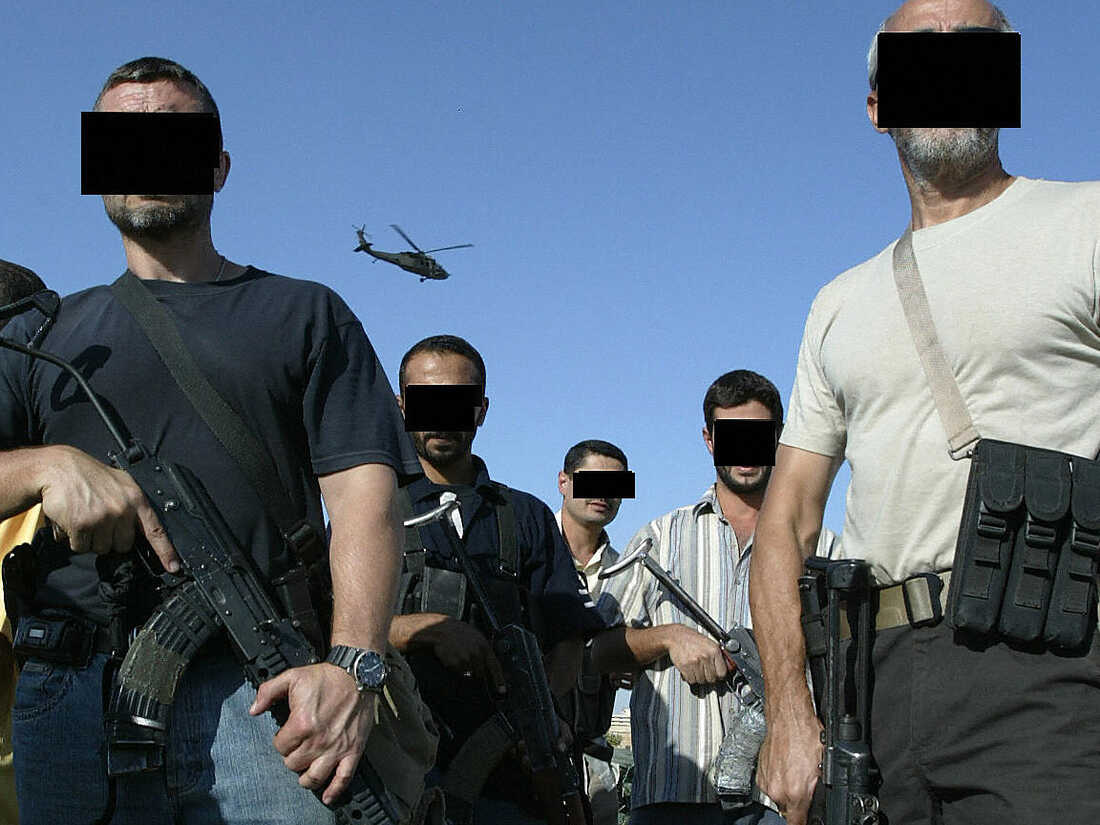
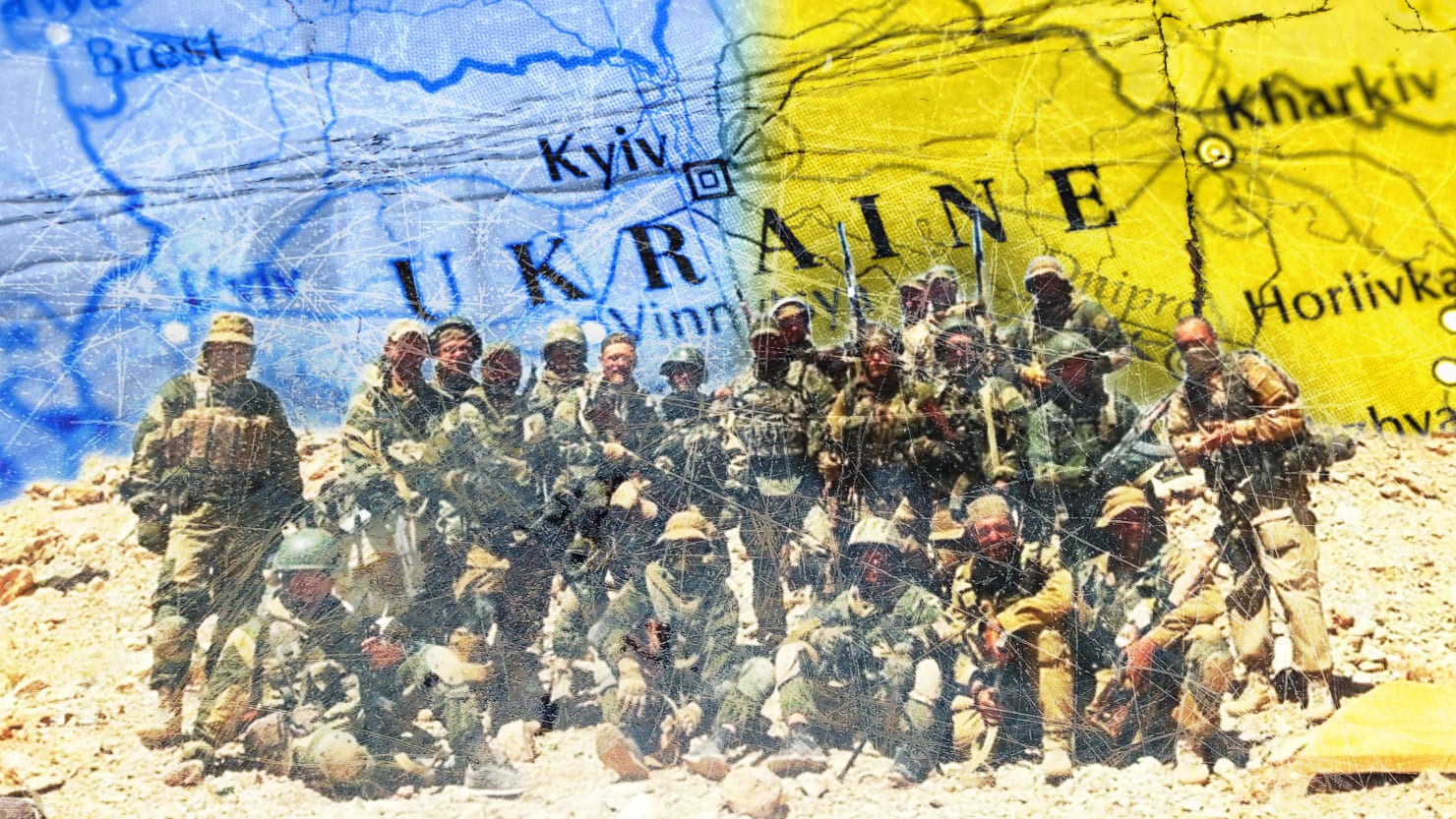
For Millennia, Mercenaries looking for gold and a good fight have existed across the globe ever since humans came across neighbours they’d rather not have. In the post-cold war era this phenomenon has resurfaced in a major way. With ex-service, government and business personnel formulating Private Military Companies (PMCs) to offer a range of conflict services both overt and covert to the highest bidder in conflict zones across the world. From governments and corporations to terrorist organisations, the demand for privatised violence has only increased since the first invasions of Afghanistan in 2001. The advent of privatised conflict has changed the nature of warfare in major ways, allowing for a discrete fighting force, politically unaccountable to governments utilising them as a cheap and purposeful force to enact foreign policy goals and legally unaccountable to international law, allowing for huge breaches in human rights and the rules of engagement on the battlefield. As domestic audiences become more adverse to the use of national troops to fight in places they couldn’t even find on a map, PMCs have become almost a necessity for all varieties of polities to achieve their international aims. This article will question the supposed monopoly states hold as the singular violent actors within warzones, exploring the concept and practical use of PMCs, including an in-depth analysis of ‘The Wagner Network’ as a unique example and how they are leading the expansion of PMC services into completely different industries, at times looking more like a cartel than a registered security service. In a recent parliamentary committee investigating the extent of this network, one of it’s recommendations was to label it as a ‘Terrorist Organisation’ in itself. Is the future bound for an increase in private hostilities and will we see further proliferation of Private Military Companies taking over more roles of traditional state behaviour, or will the international community bind together to halt the tide of private warfare?
The Origins of Mercenaryism

As Colonel George, H. Dodenhoff of the US Marine Corps writes in 1969; “The use of Mercenaries is probably as old as war itself.” Indeed as polities grew and developed a taste of expansion or needed a force to defend itself from outside invaders, career soldiers across the world were in demand. Where local populations were not great or skilled enough to adequately wage war themselves, a professional force was required. The archaeological record takes us back over 4,500 years to find the first verifiable instance of Mercenary use. The photo above depicts a relief showing the ‘Medjay’ or Ancient Nubian archers that Egyptian Pharaohs would rely upon to bolster their own ranks with highly skilled fighters. This trend was to be set in stone, quite literally, as a hallmark of armies for centuries to come maintaining itself as one of the longest standing industries in the history of the world, second only to farming. Mercenaries have been utilised everywhere as auxiliary forces attached to an army, personal bodyguards for rulers of huge empires and security for foreign businesses across the globe. The Ancient world was highly reliant on mercenaries to conduct warfare, with even the Roman’s Imperial Army at the end of it’s time consisting of 60% Visigoths, protecting an Empire they did not belong to. Some other notable mercenaries from history include;
- Xenophon of Athens & the Ten Thousand (430-355 BCE)
- Arminius, German Roman Legionnaire (9 CE)
- Harald Hardrada, Viking Mercenary (1015-1066 CE)
- Templar/Hospitaller Knights, Crusades (1119-1312 CE)
This trend of Mercenaryism continued uninterrupted for years until the creation of the ‘Westphalian Order’ after the 1648 Peace of Westphalia. In the long shadow cast by the collapse of the Roman Empire in the 4th Century, Europe had been a nonstop battleground for territory and resources between leaders of smaller and smaller Empires, Kingdoms, Principalities and City-States. In the Aftermath of the 30 Years War which had claimed the lives of an estimated 4.5-8 million people, European rulers began to change tone in their view of Mercenaries. When a plethora of political actors lay claim to overlapping territories and population centre’s with huge wealth to finance these claims and annihilate its competitors, it only leads to mass violence between all, and in the process creates a massive market for private warriors, who saw no reason to quell the violence when it only continued to line their own pockets. Rulers became wise to this and in a process that spanned more than 2 centuries began the nationalisation of military force, creating standing armies loyal only to their homeland. In conjunction with the outlawing of private armies, smaller nonstate actors now had no access to violence and had a stark choice; bow down to the state as a subsidiary or die. States quickly realised that those who hold the means to commit violence are the ones who are able to create the rules that the rest have to follow, and so monopolising the market for violence was a direct way to do this, establishing the nation-state as the only ‘sovereign’ actor that had the right to wage war. Warfare quickly became a state-on-state affair, coming to be known as conventional warfare but as Sean McFate adequately puts it; “The Westphalian Order spread across the globe through European colonization, and today we have internalized it as timeless and universal, even though it is less than 400 years old.”
Mercenaryism did not disappear immediately however, reinstituting as a state-sponsored affair to enact stately foreign policy or trading missions such as the Dutch or English East India Companies. Yet by the 1850s the industry was all but defunct with the last known official use of a mercenary force in 1854 during the Crimean War. The industry would go underground, with lone wolves travelling between conflict zones secretly earning coin from anyone willing to risk employing them. The industry as it was known for centuries was all but dead for the next 100 years.
PMCs in the Modern World
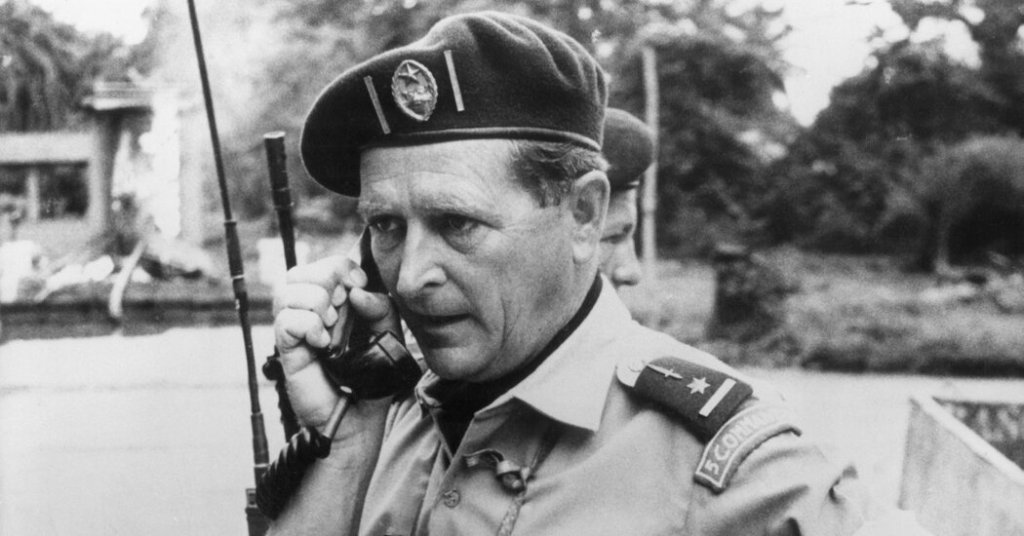
After two World Wars and the death of Colonial Empire en masse, a new geopolitical balance was born in the form of Capitalist America and the Communist Soviet Union, which allowed for a modern re-birth of the Mercenary industry. This new Cold War fundamentally altered the viability of conventional warfare on a massive scale. Warfare was no-longer a direct affair, with the US and Soviet Union avoiding head-on conflict mainly due to the proliferation of nuclear weapons since 1945 and the fact that they shared no common borders. In the post-war era proxy wars, covert operations and spheres of influence were the new terminologies describing warfare in the bi-polar world. This new geopolitical stalemate created the conditions for a resurgence of private military players re-entering the global stage in a major way. One of the first instances of a private force being utilised in conflict after the century-long hiatus was ‘4 and 5 Commando’ led by Irishman & ex-British Army veteran ‘Mad Mike’ Hoare who raised a small force of mainly South African’s (but also included British, Belgian and German veterans of WWII) to work for the businessman turned Prime Minister Moise Tshombe during the ‘Congo Crisis’ of 1961-65. Hoare’s force was employed to crush rebellion in Katanga in 1961 and in Eastern Congo during the ‘Simba Rebellion’ from 1963-65. Backed by the Congolese government and the West who had orchestrated the ousting and murder of the previous democratically-elected Patrice Lumumba in 1960, Hoare was utilised as a counter-insurgent force to restore government control to the outer provinces of Congo who were in support of Lumumba and armed by the Eastern Bloc. Whether knowingly or not, Hoare and his Commando task forces had laid the foundations for the future of private warmongering for years to come. In interviews, Hoare professed that his force were ‘volunteers’ but each man was paid the equivalent of $1,100 a month to put down rebellion. He was also very brash about the actions of his force, openly bragging to the BBC no less in 1969 that he would make captured rebels ‘walk blindfolded through a minefield’. Hoare’s forces were notorious for their utter devilish treatment of captured rebels and civilians alike, as well as ransacking bars and banks after clearing out areas from rebel occupation.
Nor was this the only time Hoare would influence the discussion around Mercenaryism in a major way. In 1981, Hoare was contacted to lead a force of 55 Mercenaries to attempt to depose the Seychelles government after France-Albert Rene had ‘promoted’ himself from Prime Minister to President which threatened the US’ access to their military base on the nearby Diego Garcia Island. However Hoare’s force was foiled in the airport after one of his men accidently queued for the ‘Something to Declare’ line in which after inspection by a Customs Officer found their AK-47s concealed under a false bottom in his bag. Another Merc assembled his weapon, shooting the Officer before he could reach safety. After a shootout at the airport Hoare and his force had to evacuate by plane to flee capture and avoid being prosecuted for treason. In a major part, Hoare’s adventures had created a backlash necessary to warrant an update of the Geneva Conventions outlawing Mercenaries from combat in 1977 and a further 1989 UN Mercenary Convention again criminalising the guns-for-hire industry which was signed by 46 different nations in 2001. However, these legal implications are as restrictive as they are imprecise in the definition of a Mercenary, and as military historian and legal scholar Geoffrey Best remarks, “any mercenary who cannot exclude himself from this definition deserves to be shot—and his lawyer with him!”
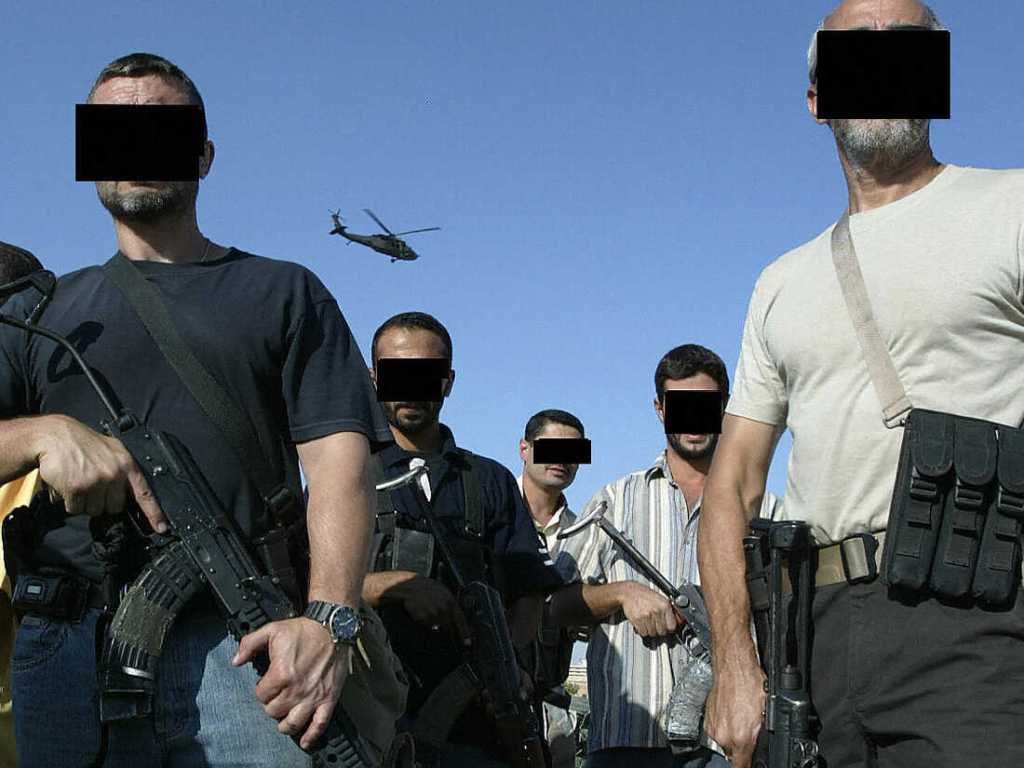
The Fall of the Berlin Wall in 1989 was another key date in the restoration of the Mercenary industry back to it’s former glory. As International Law failed to properly develop effective protocols against the use of Mercenary Companies, the end of the Cold War sparked the decline of the Westphalian Order as the dominant political system. State sovereignty began to erode across the globe, as the implosion of the Soviet Union created power vacuums in it’s old territories and overnight led to the vanishing of superpower support for allies involved in proxy wars abroad. New states began to tear themselves apart like in the Balkans, some failed altogether such as Liberia and Somalia whilst others were captured by narco-groups such as Mexico and Guinea-Bissau and others yet attempted to be destroyed altogether to make way for a ‘Global Islamic Caliphate’ such as Iraq & Syria. This geopolitical chaos was the perfect storm for Mercenaries to profiteer from. Yet due to the international legal protocols in place Mercenaryism had to die in name in order to continue legally unopposed. This is where the term ‘Private Military & Security Companies’ (PMSCs) originates from, (the longer version of PMC) corporatising and organising into an entity that aesthetically looks like a legitimate company for all intensive purposes, offering ‘bespoke security services’ to all manner of clientele yet never opaque enough to see a true account of what they are actually doing and who they are actually working for. All it took was a name change, as Sean McFate delicately illustrates;
“International public law is feeble and difficult to enforce. One famed legal scholar called it the “vanishing point of law,” since it is followed by courtesy rather than compliance. This is especially true with the Law of Armed Conflict. There is no international judiciary, police force, or prisons so there is little consequence for violating the law…Some think the answer is self-regulation, such as the ICOCA (International Code of Conduct Association). While a noble effort, it does not apply to covert mercenary actors who are the major threat to international order.”
Notably, the US, UK, Canada, Australia, China, Russia & Turkey are not signatories to the 1989 UN Convention. Although they would reprimand use of PMCs against themselves, they are clearly not adverse to using them against opponents. Furthermore less than 15% of registered PMCs opt for regulation by the ICOCA, with Open Democracy UK finding that 77% of UK based PMCs fail to even name their staff, with companies disappearing as quickly as they appear, only existing to deliver individual projects, or rebranding quickly after fatal incidents adding to the shadiness of the industry and it’s dealings as a whole. This has given rise to a boom in the profitability of privatised warfare however for businessmen and ex-servicemen looking to make a career from war outside the typical national avenues. It is estimated that the industry is worth $275 billion a year, and operatives can earn a cool $120,000 a year tax-free. In the period of 2007-12 the US Department of Defence paid out $160 billion to private contractors in Iraq & Afghanistan, and by the height of conflict contractors comprised over 50 percent of the U.S. force structure in Iraq and 70 percent in Afghanistan. These PMCs gain lucrative contracts from governments to supplement national troops in conflict zones, train existing military units (usually in countries with a poor military record) and conduct security for high-priority personnel, sites of strategic or economic importance such as mines and oil rigs as well as the transportation of valuable goods between bases or to ports and airports. This also bleeds over to civilian and business security in dangerous areas of the world, where contractors conduct work in much the same way they do for governments. Yet why utilise PMCs in the first place if they are expensive, and rarely sympathetic with the causes of the conflict they are entering? Politically, domestic audiences around the world have become more and more adverse to conflict and the horrors it puts combatants through. Especially Western audiences after Vietnam, Iraq and Afghanistan – war does not poll well, especially extended conflict. So PMCs provide an adequate service, without their exploits endangering national personnel and provide governments with a level of plausible deniability that allows them to distance from any potential blusters. Such as the Nisour Square Massacre, where in 2007 Blackwater operatives murdered 17 Iraqi civilians, injuring a further 20 including 4 children, causing worldwide outrage, but as non-US personnel the US government was not directly responsible for the atrocity. As we have seen, there are little legal ramifications for violations of international human rights, and even national governments are likely to ignore these; with President Trump in 2020 pardoning the 4 operatives found guilty by US courts a few years prior.
There are more than 30 notable PMCs in operation at current, with the large majority residing in the West and in particular the Anglosphere. Due to the context of the Cold War and a history of shared culture, language and values the US, UK and Australia specifically maintain consistent collaboration within the industry with HQs, operations, personnel, ownership and employers all hailing from these nations. This has allowed companies like G4S, Blackwater (Academi) & Triple Canopy to become highly successful, even being traded on Wall Street and operating in every single continent bar Antarctica. The UK itself has 235 registered PMSCs known to be currently operating in 17/30 countries the Foreign Office lists as ‘Human Rights Priorities Countries’. However the industry has not stopped there, in the wake of Iraq & Afghanistan the industry has globalised, moving beyond the image of Blackwater in Iraq in 2007 to become more lethal, more irrespective of International Law and more willing to work for risker clients and in more dangerous political climates. It is notable that oil-rich Arabian States have begun to employ PMCs to step-in for a lack of a capable and aggressive national military to conduct military operations and pursue foreign policy goals. Interestingly they have begun a trend of hiring South American contractors, veterans of the Drug Wars at a considerably cheaper rate than Western Mercenaries which Western PMCs have followed in earnest. According to a Department of Defence (DOD) report, nearly 50,000 contractors worked for U.S. Central Command in 2018. Of these, only 20,000 were American. There were 2,002 armed contractors, 746 of whom were Americans and 1,256 whom were foreigners. The niches of the PMC industry go further still, with some PMCs contracting for Terrorist Organisations. Malhama Tactical, based in Uzbekistan are made up of exclusively Sunni Muslims and will only work for Jihadist extremists, with previous clientele such as Nusra Front and the Turkistan Islamic Party in Syria. In the wake of the US destabilisation of the Middle East, it has unleashed an ever-expanding market, commodifying warfare in every politically undermined and conflict-prone region creating a huge demand for private contactors that are seemingly continuing to push the boundaries of what constitutes the normal activities of these private companies. In light of this, Western powers and contractors alike have faced significant backlash against their presence in many of these states, allowing for alternative political actors to take their place. Yet no one has taken advantage of this context and extended the reach of the privatised industry into more than just the military sphere like Yevgeny Prigozhin and The Wagner Network.
The Wagner Network

Whilst the Wagner Group is not the only Russian-founded PMC in operation, it is the most expansive and significant. Since 2014, Wagner has operated in at least seven countries: Ukraine; Syria; the Central African Republic (CAR); Sudan; Libya; Mozambique; and Mali in an offensive military capacity. There are 10 further
countries where there is medium or high confidence that it has been involved in
a non-military capacity since 2014, and many more countries where the network’s
presence is rumoured. Particularly in the Middle East and Africa, Wagner has sunk it’s teeth into regions that have rejected western support in favour of Russian-backing to secure unstable regimes from economic and political instability. Wagner have acted as personal security for African leaders, industrial security for key sites, trainers for regular, intelligence and Special Forces units as well as combatants themselves. What is particularly interesting is the almost sibling-like relationship Wagner has held with the Kremlin, who to varying degrees have utilised the private group as a direct but covert actor of the Russian state itself, collaborating with and often instructing leadership in it’s operations, which helps to achieve Russian foreign policy aims with a cover of plausible deniability of government involvement. The Russian military is known to closely collaborate with Wagner, providing logistical and transport support for their operations. A 2023 UK Parliamentary Foreign Affairs Committee tasked with investigating the extent of Wagner presence and operations received testimony from an ex-Wagner fighter who said of the relationship between the Kremlin and Wagner;
“All that is necessary for combat- uniforms, equipment, weapons and
ammunition, was received from Ministry of Defence stocks…Military transport aircraft of the Russian Armed Forces deliver mercenaries and small dimension/weight cargo to the Khmeimim air base (Syria) and further to Africa. Air bases in the city of Chkalovsk (Moscow Region) and Krymsk (Krasnodar Territory) are used to transport operatives of PMC Wagner. Heavy duty cargo, equipment and ammunition for PMC Wagner are delivered to Syria by the Russian Navy.”
Often in these fragile states, agreements with host governments are negotiated by Prigozhin’s staff, but directed by the Kremlin to support a regime of their choice. The Russian state seeks to find ways to expand it’s influence in regions where key resources and markets can be accessed and simultaneously diminish US and European presence and access to those same resources and markets. This has been achieved primarily through Wagner, who as part of payment for their services have “Gained access to natural resources on preferential terms, to the detriment of the national economy. In Sudan, Wagner-linked gold mining companies have benefited from generous concessions. The network appears to have a “chokehold” over Libya’s natural resources and export facilities; consequently, “Libyan oil output has drastically decreased”.” The potency of Wagner’s presence was nowhere more obvious than the Central African Republic with the group engaging what can only be described as ‘State Capture’ a systemic corruption of existing political institutions for it’s own private benefit. Due to the CAR’s heavy reliance on Wagner forces as security personnel, and to enforce the re-election of it’s president Touadera through any means necessary, the CAR have given way to undermining freedom of the press, political opposition, good governance, international engagement and even potentially the national constitution. In exchange, Prigozhin has negotiated access to diamonds, gold and uranium which whilst mainly taken as compensation for the use of Wagner services, is also indirectly funnelled into the Russian state to help stabilise the economy in light of sanctions placed on it after the invasion of Ukraine. Their gold-smuggling operation out of Sudan has also given much monetary stability to the Russian state, been seen as ‘critical’ to its withstanding the impact of western sanctions since March 2022.

Wagner’s geographic reach, extension of operations into more non-military spheres, coupled with the close relationship with the Russian state is why the Parliamentary Committee has come to label Wagner as a ‘Network’ rather than a conventional PMC; a sprawling, decentralised network of individuals and commercial entities, which is active in several countries and for which the ‘membership’ is not always clear. Exploiting this web of entities is central to the network’s modus operandi. This has come to threaten international security and been described by Transparency International as ‘increasingly alarming’. The Wagner Network has been an experiment in privatised anti-western propaganda across Africa, their main geographic footprint where Prigozhin-linked social media companies, political advisory groups, media campaigns and opportunistic Russian disinformation have made a consistent effort to effect the political direction of the continent. The committee found that the Wagner Network had engaged in these electoral, advisory and disinformation services in Burkina Faso, Zambia, Chad, Zimbabwe, DRC, South Africa, Madagascar, Mozambique, Libya, and Mali all between 2017-2022. In particular Wagner and by extension the Russian state have made a concerted effort to support the various coup d’etat’s in West Africa, with the report detailing how in Mali in late 2021 the Wagner Network played a decisive role in the growth of anti-French sentiment through social media campaigns both highlighting the French colonial past and the alternative of Russian support for a Mali free from western intervention. Most recently this has extended to Niger at the time of writing, who have banned the export of uranium and gold to France and have essentially told them and other western powers to F*ck off! With the French government set to evacuate all nationals, and potentially the 1,500 troops stationed there, it completes the belt of African states from Burkina Faso in the West to Sudan in the East that have rejected western support, usually in favour of Russian help. Although it’s not verifiable at this time whether Wagner have had a hand in these developments, it would be very unwise to count them out.
However, there is a significant gap between perception and capability when it comes to the Wagner Network. Despite the continued belief by some that inviting them into a country will result in benefits, the reality is that regimes pay a high price for working with the Wagner Network. The original outcomes are rarely achieved. During the past 10 years, Wagner fighters have left behind a trail of atrocities in virtually all theatres where they have operated, with limited accountability. They may present themselves as a highly trained, professional fighting force but their indiscipline, their excessive violence and their financial motivation mean that the network has functioned like an international criminal mafia, fuelling corruption and plundering natural resources. This happiness to engage in illegal activity is aptly illustrated by the Wagner fighter that told the committee that Prigozhin has even bought arms and ammunition directly from Hezbollah. Some regimes’ reliance on the network for survival means that Wagner actors show little respect for the citizens or the laws of the countries where they operate. The network’s military and political involvement in the Central African Republic is all encompassing and should serve as a warning of what may happen elsewhere. Even when Wagner’s deployments do not result in benefits for the host country, they are often a great success for the network itself due to the lucrative resources it accesses, particularly in the Central African Republic and Sudan. Dr Sorcha MacLeod, Chair of the UN Working Group on Mercenaries, warned of the “trends of widespread violence and grave human rights violations” that surround them. Wagner fighters stand accused of atrocities in virtually all of the countries where they have operated militarily since 2014. For example, in Ukraine, the German foreign intelligence service intercepted messages in April 2022 suggesting Wagner fighters played a leading role in the massacre in Bucha. The Ukrainian Prosecutor General is processing more than 93,000 incidents of potential war crimes in Ukraine; he said on 3 July 2023 that Wagner forces had committed “among the most severe crimes” within this number.
Wagner has illustrated that its presence and activities play an active role in regional destabilisation in Africa. Its presence increases the likelihood of violence (including gender-based violence), corruption, autocracy, conflict escalation, the displacement of people, and greater competition over resources. Coupled with its poor history of effective combating of terroristic groups in the region, which allows these groups to develop and expand without proper counter-insurgency tactics necessarily opens regions up to a breakdown of rules-based order under the guidance of the state, birthing a multiplicity of violent actors to emerge and compete for control of territory, allowing violence to become dispersed and fragmented, thus decaying the nation-state as a viable and effective political entity. It can be ascertained that the Wagner Network in itself has played a monumental role in the breakdown of democratic practices and functional civil societies in the states where it is active, profiteering from the pain it has contributed to, whilst acting as another insulating layer for the Russian state from economic hardships due to the war in Ukraine, and further Kremlin foreign policy whilst national forces are entrenched along the Donetsk and Luhansk provinces. Although Prigozhin is gone from the leadership of Wagner, the Russian state is too reliant on the benefits it brings back to the motherland and will continue to utilise it as it has done since 2014. Russia’s Foreign Minister Sergey Lavrov has already stated Wagner’s operations in Mali and the Central African Republic “will continue”. Likewise, a Russian envoy recently reassured General Haftar of Wagner operatives’ continued presence in Libya, and Russia remains a committed regional actor in Africa. The network’s ties to the GRU may also support its survival. Although the threat of a privatised force challenging the Russian state inside it’s boundaries was short-lived in June, it was a sharp reminder of what a PMC is capable of, and what Wagner has been up to for nearly a decade. If governmental institutions are weak and leadership fails to curtail private power, very quickly the state can see itself become involved in a tooth and nail fight with Mercenaryism as it was centuries ago.
The Future of Privatised Conflict
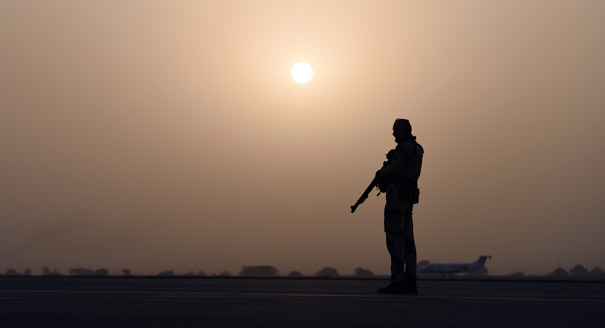
Although a long piece in itself, this article is just a glimpse into the wide and ever-complex world of private military companies, which continues at present to expand geographically, operationally and financially at unprecedented rates in the modern world. A slow decline of the American Empire since the turn of the century, coupled with massive shifts in geopolitical power has led to and created massive ripple effects of destabilisation in regions across the world. As superpower authority and presence wanes globally, and state sovereignty is eroded by an increasing number of non-state actors, PMCs have thrived in the chaos and evolving nature of warfare. As Sean McFate settles it;
“You can kill individuals but not the market conditions that give rise to mercenaryism in the first place…War’s without states is a massive threat to global security, which has been systematically ignored, if not under-reported and understood by states and global institutions. A re-writing of world order not seen since 1648. If international institutions and global power players do not act to make it more difficult for PMCs to operate without impunity, and their backers more difficult to hire and utilise them, then war will become an increasingly private affair, whether fought between corporations, states or terrorist groups.”
As a result the world remains and looks to become an ever-more unstable place, the regions most susceptible to violence will continue to exist in a never-ending cycle of conflict as PMCs from all corners of the globe arrive seeking fortunes from and not an end to one of the worlds most horrifying and bloody instances of the human condition; war.
Sources
https://en.m.wikipedia.org/wiki/Private_military_company
https://en.m.wikipedia.org/wiki/List_of_private_military_contractors
https://guide-humanitarian-law.org/content/article/3/private-military-companies/
https://amp.dw.com/en/wagner-group-what-are-private-military-companies/a-66062061
The Hazards of Going to War for Profit
https://press.un.org/en/2018/gashc4246.doc.htm
https://www.jstor.org/stable/44641084 – A Historical Perspective Of Mercenaries. Colonel, George, H. Dodenhoff – US Marine Corps. Naval War College Review, 1969.
https://books.google.co.uk/books/about/Napoleon_s_Mercenaries.html?id=5FmaBgAAQBAJ&redir_esc=y – Napoleon’s Mercenaries: Foreign Units in the French Army Under the Consulate and Empire, 1799-1814.
https://www.youtube.com/watch?v=u7PCfN7IXQo – Harald Hadrada: Viking Mercenary
https://en.wikipedia.org/wiki/United_Nations_Mercenary_Convention#Signatories_and_parties
https://en.wikipedia.org/wiki/Mad_Mike_Hoare
https://carnegieendowment.org/politika/90294?utm_source=rssemail&utm_medium=email&mkt_tok=ODEzLVhZVS00MjIAAAGNVRwR96ccyBl7ZbEI8CAnpNC6ZpA2aoeVLt2CJemHh0xzmY-Y1WHHgLo80kqGoKTNtYf8epoSU_f3KHMPYsKOtCaLwhPUgA1c_EhX5fQu1g
 Politica Carnivora