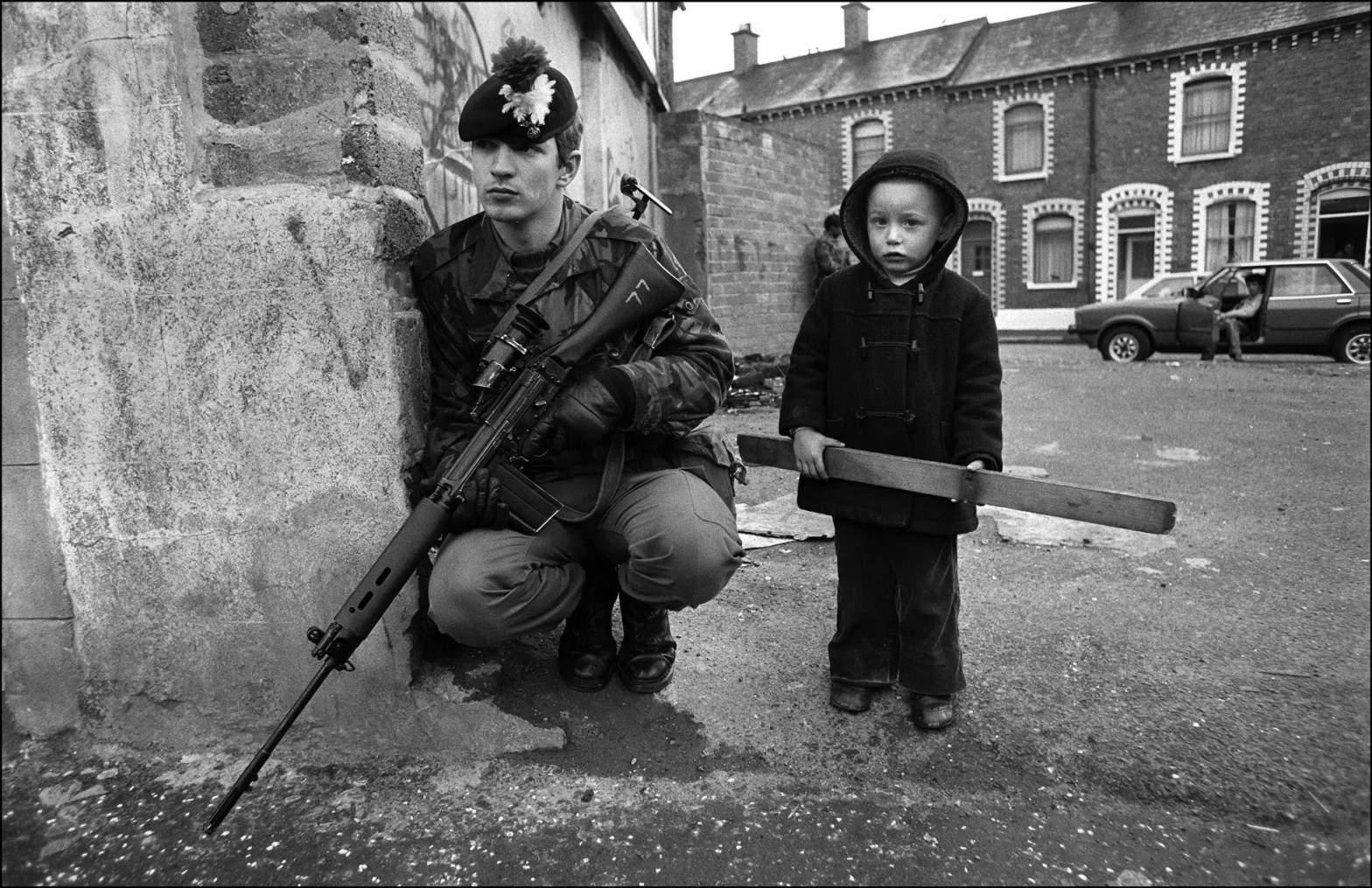
Welcome to Ireland
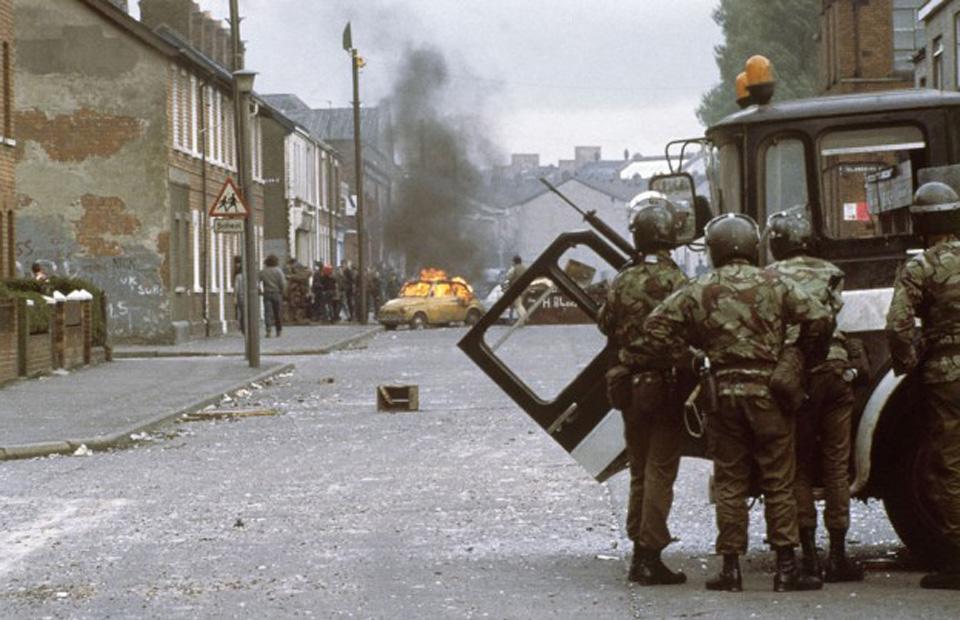
For an Empire such as the British, control of its colonial populations has been a key strategic objective ever since English settlers founded Jamestown on the North American east coast in 1607. As the Empire expanded over the following centuries, it became clear that an institutionalised police force was needed in each territory to maintain social order in Britain’s favour, and crush dissent in its most threatening forms. Often these police forces engaged in long and brutal campaigns against the local population, when it was necessary to subdue their challenges to political control. Nowhere was this actuality more evident than in Ireland, which had been a practice ground for colonial policing techniques that were then exported around the Globe. This essay will evidence and argue that in Northern Ireland the British state manifested itself most often and most clearly to the civilian population as a ‘quasi-military-policeman’ post-1922, with a specific focus on the heightening of their campaign against Republican sentiment during 1968-1998 or the time known as ‘The Troubles’.
The collusion between the British State (and Army), the Royal Ulster Constabulary (RUC) and loyalist paramilitaries (Such as the UDA & UVF) will be analysed, which specifically targeted Republican individuals and the wider Catholic community at large to wage a war of overt and covert suppression of the nationalist movement, and to achieve the defeat of the Irish Republican Army (IRA). In particular the Force Research Unit (FRU), a covert military intelligence unit of the British Army will be investigated to outline the connection between the British state and Loyalist paramilitaries, who directed the latter to undertake political assassinations and bombings to destabilise Republicanism. These developments deeply wounded the Catholic community in Northern Ireland for decades, and overwhelmingly left innocent civilians vulnerable, harassed and sometimes murdered. An overwhelming amount of Catholics were marked as targets for staunch Unionists either within or without the official security system, mostly on baseless suspicions of IRA affiliation. By the peace settlement in 1998, thousands had been wrongly interfered with by the state, and many had lost their lives because of it. The Security Apparatus ceased to be the protector of liberty of all of those under its sovereignty, and acted rather as a forceful instiller of order in its own design, especially upon those it deemed ‘political criminals’.
A Contextual History of Policing in Northern Ireland
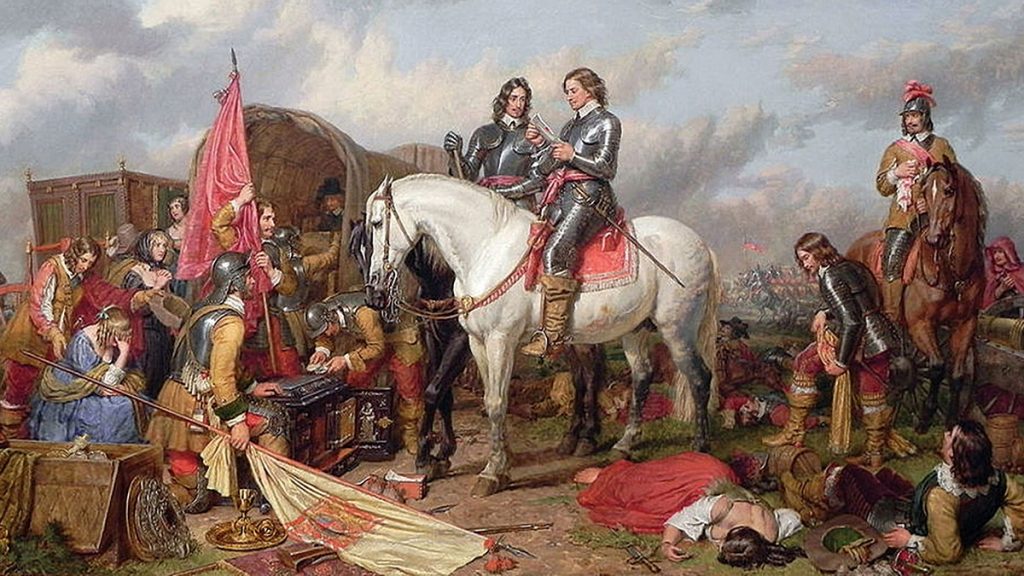
Before ‘The Troubles’, the development of Irish policing needs to be discussed to place the events of the 20th Century in the proper context. Ireland itself has been consistently invaded and subjected by the British Crown as early as 1167. As Britain developed into a global Empire from the 17th Century, Ireland remained a consistent thorn in the side of the crown, and thus Britain dedicated considerable resources to keep it under control. It was finally conquered by Cromwell during the latter part of the Irish Confederate Wars (1641-1653) in which the parliamentarians violently killed and dispossessed Irish Catholic’s under the 1652 Act of Settlement, transferring land holdings to Protestant settlers and barring them from Parliament.
By the 19th Century the British administration had created the Royal Irish Constabulary (RIC), a quasi-military police force which was regularly armed, and was manned in majority by Anglo-Protestant men; especially within the Officer Corps. The force was known for its brutality in dealing with civil unrest, from the Tithe War to the War of Independence. Indeed it got its name after the Fenian rising of 1867, becoming the first royal police force and ‘…a model for a number of police forces throughout the world.’ (Police Service of Northern Ireland). After partition in 1922 the RIC dissolved, and in the Northern Counties still controlled by the British state it re-emerged as the RUC. It was initially made up of 3,000 men, with over 50% being ex-RIC servicemen, and from 1922-1970 control of the RUC was vested in the Minister of Home Affairs, de facto a Unionist politician.
For all intents and purposes the RUC was constructed as a tool of regional control, open to the political manipulation of Westminster through Stormont. The RUC was operationally supported by its auxiliary organisation, the Ulster Special Constabulary (USC) and its own Reserves (RUCR). Since the 1920s the USC was a wholly protestant force, doing so under the threat of IRA infiltration. The USC was a highly sectarian organisation, and provided over half the recruits for the RUC before its own reformation into the Ulster Defence Regiment (UDR) in 1970 within the structure of the British Army. By the end of the Troubles, Security Force personnel numbered over 13,000 with over half of the UDR (usually a part-time force) in full-time work.
In light of the make-up and the darker past of the RIC, RUC and USC the Catholic population was overwhelmingly highly distrustful and hateful of them. After the summer riots of 1969, in which sectarian violence exploded across Northern Ireland leaving eight Catholics dead, the Scarman Tribunal convened in the aftermath and made the conclusion that Catholics viewed the USC, and by extension the wider security system, as ‘the strong arm of Protestant ascendancy’. This was to set the scene for the next 30 years of Northern Irish history, which positioned the Catholic minority in direct opposition to the RUC and it’s counterpart’s objectives to maintain British sovereignty in the North.
‘Ulsterisation’ & the Alienation of Republican Communities
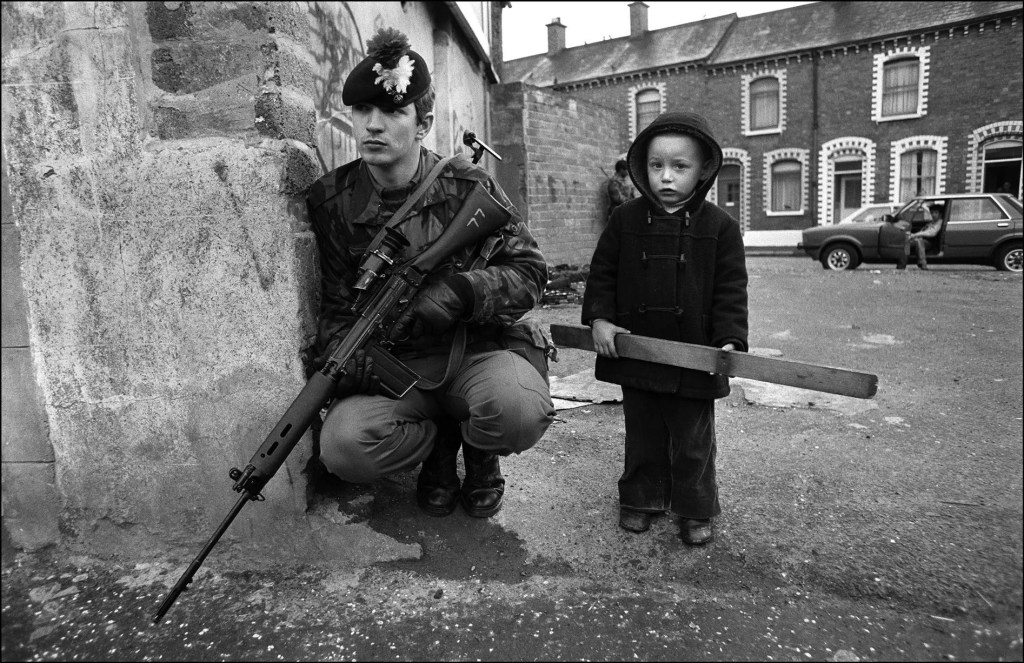
The policing instruments of the Northern Irish state were overwhelmingly filled with members of the Protestant community, which to a large degree fuelled the tensions of segregation between Catholics and Protestants; one group entrenched within the stately apparatus and the other poorly represented, especially towards the levers of power. Yet it cannot be argued solely that just the policing institutions acted in isolation to alienate the Catholic community. The RUC and USC/UDR were nodes in a wider web of securitisation of Northern Irish society. What can be said is that a longer process of ‘Ulsterisation’ had been a de facto apparent for many decades, and in light of the heightening of sectarian violence had been catalysed in order to respond to the threat of Republican militarism. ‘Ulsterisation’ was part of British strategy to confine the conflict and portray it as “”Irish people killing and policing Irish people” by replacing British personnel with Ulster Protestants. Yet what ‘Ulsterisation’ really can portray is the consequences of this strategy; the development of a hostile environment for Catholics through policing, the judiciary, and legislation.
Catholics were unduly and almost exclusively subject to restrictive legislative Acts, dating back to 1922 when the ‘Special Powers’ Act was passed and made permanent 11 years later. This provided sweeping emergency powers to the Minster of Home Affairs from which internment, arrest, questioning, search and detention could all be liberally applied under the pretext threat of the IRAs military campaign. By 1973 these legal powers evolved into the ‘Northern Ireland Emergency Provisions Act’ after Westminster took direct control and further added non-jury trials for ‘scheduled offences’, manipulated the rules of evidence in politically-violent cases and overall aimed to diminish the political dimensions to dissipate the notion of the ’Colonial War’. This extended to the court system, wherein a wide imbalance existed between the majority of those on trial, and those who made up the juries and judiciary. The make up of the legal system largely dissuaded Catholics en masse from positively engaging with those that enforced such a domineering form of collective and targeted punishment.
Furthermore, the prison system developed for those convicted of political crimes became gleaming evidence for Catholics to display the states distain for Catholics under their duty of care. A 2010 Guardian article details the confessions of RUC interrogators at Castlereagh, an East Belfast prison, in which officers gained intelligence or confessions through a number of different torture methods such as beatings, sleep deprivation and waterboarding. This, said by the interviewee, was at times ‘sanctioned at a very high level within the force’. It is of little surprise then, that the RUC and UDR had considerable issues recruiting Catholics into their ranks. From 1961 to 1992 the percentage of Catholics in the RUC fell from 12% to 7.7% and by the late 1980s only 3% of the UDR was made up by them. Credibility through and by the end of the Troubles was highly problematic, especially after high profile cases of confirmed and alleged collusion between (ex-) members of these institutions and loyalist paramilitaries, ending the murders of Catholic civilians loosely suspected of links to the IRA or legally aiding the Republican cause.
Collusion and Death Squads
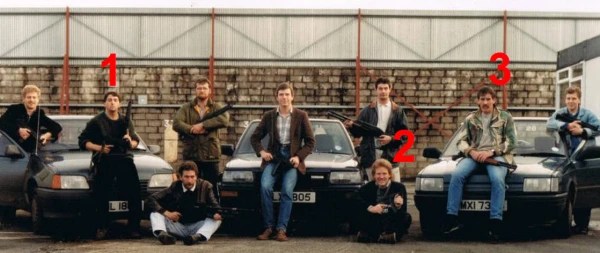
The Collusion, both formal and informal that occurred by the security apparatus and loyalist paramilitary organisations was the tip of the dagger into the heart of Catholic over-policing in Northern Ireland. In the Irish context, collusion details the use of ‘counter-gangs’ or ‘death squads’ used to eliminate or terrorise state opponents, in order to destabilise dissent. On a personnel level, many senior British Army and RUC officers had considerable experience in the use of these tactics in other colonial territories prior to being deployed in Northern Ireland from 1969 onwards. One such officer was General Sir Frank Kitson, who in his memoirs details his time during the Mau Mau Rebellion in Kenya, where counter-gangs were employed to eliminate key figures in the movement. He went on to run undercover operations during the 1970s in Northern Ireland.
Lower down the chain of command, the rank and file members of the UDR often were recruited from the same areas of Belfast & Derry/Londonderry where loyalist paramilitaries such as the UDA had solid support. Until 1988 UDR soldiers had access to key security files that contained intelligence on Republican suspects, with hundreds of these files finding their way into the hands of the UDA and UVF. As well as information, weaponry of the UDR also made its way into loyalist hands; by 1976 316 weapons had been stolen from UDR armouries, with little to no resistance from those on duty. Loyalist paramilitaries were responsible for 700 deaths between 1969-89, with over 90% proven to be uninvolved civilians. Loyalists claim the majority of these murders were based on intelligence leaked from RUC, UDR or British Army records, thanks to their vertical access to the security structure and unionist connections across institutions.
Two key cases of collusion were the murders of Pat Finucane in 1989 & Rosemary Nelson in 1999. The Finucane case particularly evidenced the connection between the FRU (British covert intelligence unit) and UDA through an inside man. Brian Nelson, who confessed to being a government double agent imbedded in the UDA was tasked to make the UDA more effective in assassinations of Republican targets. Nelson through his confession, produced ‘intelligence packages’ supposedly confidential, which included key information used by UDA gunmen to kill Pat Finucane, who at the time was representing IRA suspects in court. Amnesty International, Helsinki Human Rights Watch and the UNCHR have all launched investigations into formal collusion, and after a trip in 1998, Dato Cumaraswamy (UN Special Rapporteur) found ‘prima facie evidence of such state collusion’.
Conclusion
To this extent, it is clear there was a level of collusion that existed between the British state and Ulster-led institutions of Northern Ireland that worked in conjunction through both legal and extra-legal means to hone in on specific Republican targets and suffocate nationalist sentiment within the Catholic community at large. Both the British & Northern Irish governments intentions were set out clearly through the Troubles to achieve these goals, evidenced specifically through the toleration and potential approval of under-the-table and violent actions which moreover left legitimately legal and innocent Northern Irish Catholics unprotected and simultaneously targeted by the state through its security apparatus. Operational autonomy was key in these institutions being able and willing to carry out illegal activities to defeat the IRA. With the support of the judiciary, the RUC, UDR & the British Army a blank slate existed to work with, which they coloured with Catholic blood. The Irish government has maintained that a systematic strategy was in place, directed by the FRU whose purpose it was to carry out ‘state murder by proxy’.
Source List
McEnvoy, K. (2001). Paramilitary Imprisonment in Northern Ireland: Resistance, Management, and Release. Oxford University Press. P. 127 ISBN 9780198299073
Walker, C. (1984). “Irish Republican Prisoners – Political Detainees, Prisoners of War or Common Criminals?”. Irish Jurist. 19 (2): 197. JSTOR 44027778.
Whalen, L. (2008). Contemporary Irish Republican Prison Writing. Palgrave Macmillan. p. 57. ISBN 978-1403981936.
Police Service of Northern Ireland. A History of Policing in Ireland. https://www.psni.police.uk/about-us/our-history/history-policing-ireland
Gregory, I.N, et al (2013). Troubled Geographies: A Spatial History of Religion and Society in Ireland. 9. Northern Ireland, 1971-2001. Indiana University Press. https://www.lancaster.ac.uk/troubledgeogs/chap9.htm
Shuttleworth, I & Lloyd, C. ‘Are Northern Ireland’s communities dividing? Evidence from geographically consistent population data 1971-2001’ Environment and Planning A, 41 (2009), pp. 213-229
Hamilton, A. et al. (1995). Policing A Divided Society: Issues and Perceptions in Northern Ireland. University of Ulster, Coleraine. ISBN 185923027.
Ellison, G. & Smyth, J. The Crowned Harp: Policing Northern Ireland
Cobain, I. (2010). Inside Castlereagh: ‘We got confessions by torture’. The Guardian. https://www.theguardian.com/uk/2010/oct/11/inside-castlereagh-confessions-torture
Fitzmaurice, M. (2020). H-Blocks prisoners “endured unacceptable levels of physical and psychological punishment”, report states. Belfast Live. https://www.belfastlive.co.uk/news/belfast-news/h-blocks-prisoners-endured-unacceptable-19026871
BIRW (British – Irish Rights Watch), (1992), Intimidation of Defence Lawyers in Northern Ireland, London: BIRW.
BIRW (British – Irish Rights Watch), (1995), Supplementary Report to the United Nations Special Rapporteur on the Independence of Judges and Lawyers, London: BIRW
Grimshaw, R & Jefferson, T. (1987), Interpreting Policework, London: Allen and Unwin.
Guelke, A. & Smyth, J. (1992), ‘The Ballot Bomb: Terrorism and the Electoral Process in Northern Ireland’, Terrorism and Political Violence, Vol 4, No 2, Summer, pp. 103-124.
Hillyard, P. (1983), ‘Law and Order’, in J. Darby (ed.), Northern Ireland: The Background to the Conflict, Belfast: Appletree Press.
Hunt Report (1969), Report on the Advisory Committee on Police in Northern Ireland, Cmnd. 535, Belfast: HMSO.
Human Rights Watch / Helsinki (1997), To Serve without Favour: Policing, Human Rights and Accountability in Northern Ireland, New York: Human Rights Watch.
Kitson, F. (1960), Gangs and Counter Gangs, London: Barrie and Rockliff.
Kitson, F. (1971), Low Intensity Operations, London: Faber and Faber.
UNCHR (United Nations Commission on Human Rights) (March 1998), Report of the Special Rapporteur on the Independence of Judges and Lawyers, Geneva: United Nations. Internet: http://www.unchr.ch?Huridocda/
Flackes, W.D & Elliott, S. (1989) Northern Ireland: A Political Directory, 1968-88. Newtownards: Blackstaff Press.
Bew, P. & Gillespie, G. (1993) Northern Ireland: A Chronology of the Troubles, 1968-93. Dublin: Gill & Macmillan.
Hadden, T & Hillyard, P. (1973) Justice in Northern Ireland: A Study in Social Confidence. London; Cobden Trust.
Darby, J. (1976) Conflict in Northern Ireland: The Development of a Polarised Community. Dublin: Gill & Macmillan.
Neumann, P.R. “The myth of Ulsterization in British security policy in Northern Ireland.” Studies in Conflict and Terrorism 26.5 (2003): 365–377
 Politica Carnivora